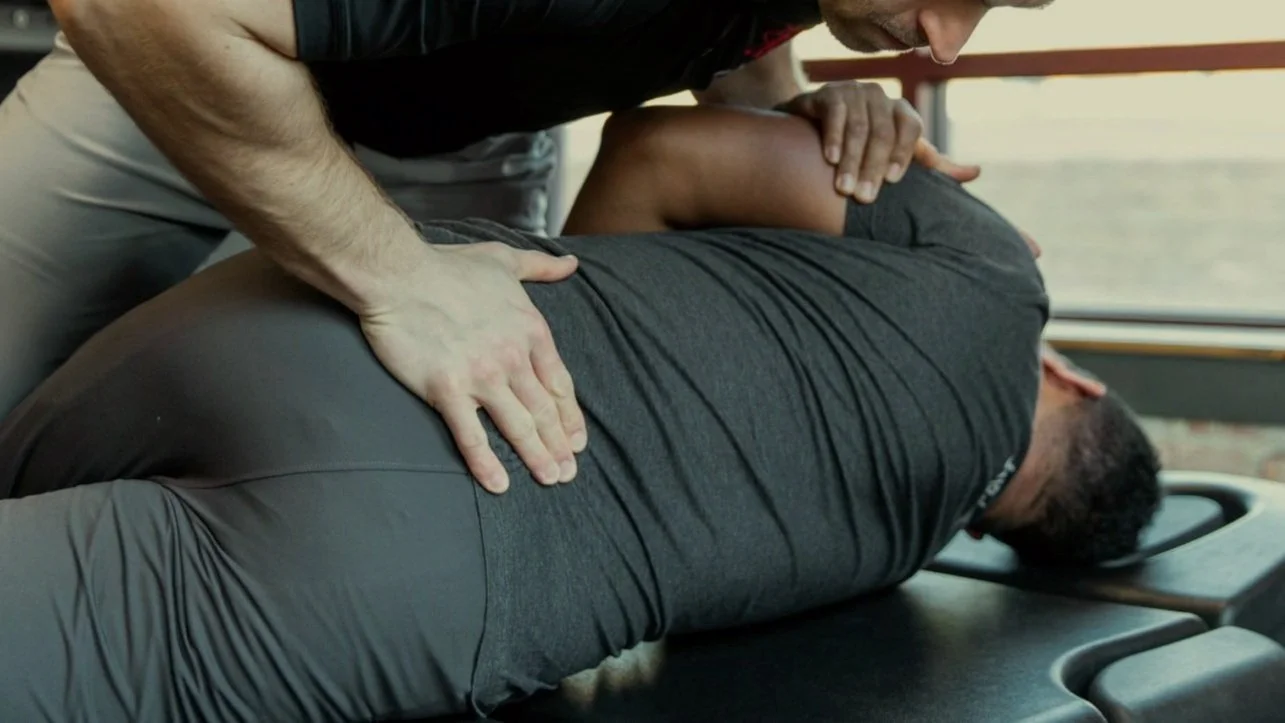

I see the same patient story more times than I can count. Someone comes in — usually a runner, a hiker, or someone who works hard and plays harder — and they've been dealing with low back pain for months. Sometimes years. They've tried rest. They've tried ibuprofen. They've tried a massage or two. Maybe they even saw a chiropractor before, got adjusted a few times, felt better, and then — a few weeks later — the pain came back. And now they're wondering if they're just going to have to live with this.
They're not. But they usually need a different approach than what they've tried.
Low Back Pain Is the Leading Cause of Disability Worldwide — and We're Still Getting It Wrong
Low back pain affects roughly 80% of adults at some point in their lives. It's the single leading cause of years lived with disability globally.[1] And yet, despite how common it is, the typical treatment pathway in the U.S. — rest, anti-inflammatories, maybe imaging, maybe surgery — consistently underperforms compared to active, movement-based care.
A landmark series in The Lancet (2018) took a hard look at how we've been managing low back pain and found exactly that: an overreliance on opioids, imaging, injections, and surgery, when the evidence points toward movement, manual therapy, and rehabilitation as first-line interventions.[2]
This isn't fringe thinking. The American College of Physicians now recommends non-pharmacologic treatment — including spinal manipulation — as the first-line approach for both acute and chronic low back pain.[3] The World Health Organization agrees. So do most major clinical practice guidelines published in the last decade.
Why Rest Usually Makes It Worse
Here's something that surprises a lot of my patients: for most low back pain, rest is not the answer. Rest deconditioning the muscles that support your spine. It reinforces the fear-avoidance patterns that convert acute pain into chronic pain. And it does nothing to address the underlying movement dysfunction that caused the problem in the first place.
The research is consistent: early active care — movement, manual therapy, targeted exercise — leads to faster recovery and lower rates of chronicity than rest and passive treatment alone.[4] In one large cohort study, patients who saw a chiropractor as their initial provider for low back pain had significantly lower rates of escalated care, fewer specialist visits, and lower imaging costs compared to patients who started with opioid analgesic therapy.[5]
The Root Cause Problem
One of the biggest reasons low back pain keeps coming back after traditional treatment is that the root cause was never addressed. The pain got treated — the dysfunction didn't.
Low back pain in active adults almost always involves a combination of factors: mobility restrictions in the thoracic spine or hips that force the lumbar spine to compensate, weak stabilizers (particularly the deep core and glutes), and often some contribution from the nervous system after chronic irritation. A spinal adjustment alone can reduce pain and improve mobility in the short term — but without addressing why the segment was dysfunctional in the first place, you're setting up the same injury to repeat.
This is why at Roam, we never just adjust. Every visit builds toward a more capable, more resilient body. We identify the contributing factors — whether that's hip mobility, glute activation, breathing patterns, or load management — and we build them back systematically with you.
When to Get Imaging — and When Not To
This is worth addressing directly, because I get asked about it constantly. MRI and X-ray findings for low back pain are poorly correlated with pain and disability. Studies consistently show that disc degeneration, bulges, and other "abnormalities" are present in large percentages of people with no pain whatsoever.[6] Rushing to imaging for non-specific low back pain often leads to overtreatment and unnecessary procedures — not better outcomes.
There are absolutely cases where imaging is warranted: progressive neurological deficits, suspected fracture, signs of serious pathology, or failure to respond to appropriate conservative care. But for the vast majority of low back pain presentations, the first step is a thorough clinical assessment and movement evaluation — not a scan.
What This Means for You
If you're dealing with low back pain — whether it's acute and sharp or chronic and dull — the evidence is clear: active, movement-based care with a provider who addresses the root cause is your best path forward. Not rest. Not pills. Not imaging first.
If you're in the Gresham, OR area, we'd love to start with a free discovery call. We'll spend a few minutes talking through what's going on, whether Roam is the right fit, and what a realistic path forward looks like for you specifically.
Book a free discovery call with Dr. Brookings. No commitment — just a conversation.
Book a Free Discovery Call- GBD 2021 Low Back Pain Collaborators. Global, regional, and national burden of low back pain, 1990–2020. Lancet Rheumatology. 2023;5(6):e316–e329. doi:10.1016/S2665-9913(23)00098-X
- Foster NE, Anema JR, Cherkin D, et al. Prevention and treatment of low back pain: evidence, challenges, and promising directions. The Lancet. 2018;391(10137):2368–2383. doi:10.1016/S0140-6736(18)30489-6
- Qaseem A, Wilt TJ, McLean RM, Forciea MA. Noninvasive treatments for acute, subacute, and chronic low back pain: a clinical practice guideline from the American College of Physicians. Ann Intern Med. 2017;166(7):514–530. doi:10.7326/M16-2367
- Dahm KT, Brurberg KG, Jamtvedt G, Hagen KB. Advice to rest in bed versus advice to stay active for acute low-back pain and sciatica. Cochrane Database Syst Rev. 2010;(6):CD007612. doi:10.1002/14651858.CD007612.pub2
- Whedon JM, Toler AWJ, Kazal LA, Bezdjian S, Goehl JM, Greenstein J. Impact of chiropractic care on use of prescription opioids in patients with spinal pain. Pain Med. 2020;21(12):3567–3573. doi:10.1093/pm/pnaa014
- Brinjikji W, Luetmer PH, Comstock B, et al. Systematic literature review of imaging features of spinal degeneration in asymptomatic populations. AJNR Am J Neuroradiol. 2015;36(4):811–816. doi:10.3174/ajnr.A4173